The relationship between magnesium and the human stress response is characterized by a complex, bidirectional physiological feedback loop. Magnesium is an essential intracellular ion, acting as a mandatory co-factor for over 300 enzymatic reactions, many of which govern the functionality of the central nervous system and the endocrine system. The Stress-Magnesium Cycle represents a critical pathway where psychological and physical stressors lead to the systemic depletion of magnesium, which in turn exacerbates the body’s susceptibility to further stress.
1. The HPA Axis and the Role of Magnesium
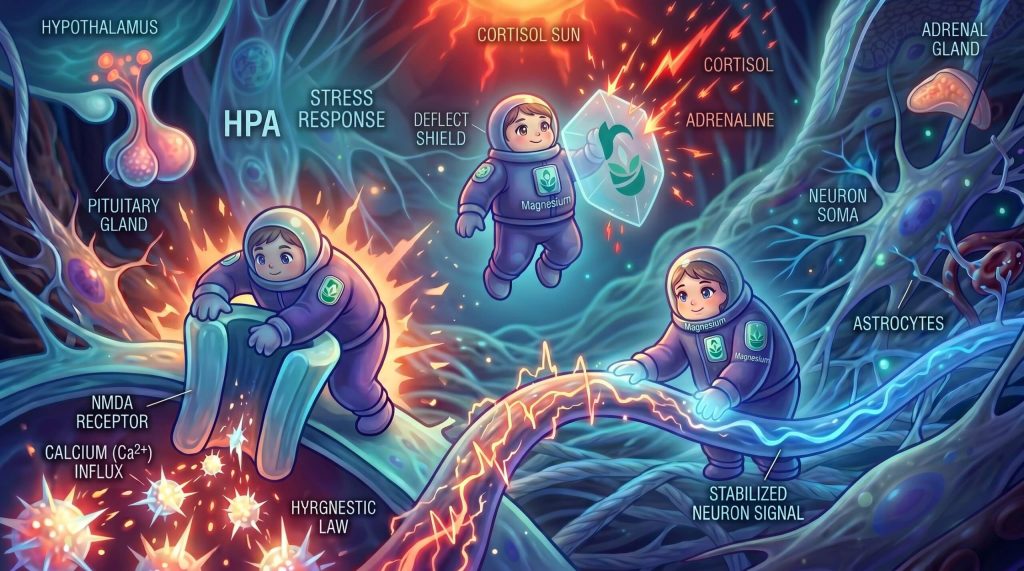
The Hypothalamic-Pituitary-Adrenal (HPA) axis is the primary neuroendocrine system responsible for maintaining homeostasis in response to perceived threats. When a stressor is introduced, the hypothalamus releases Corticotropin-Releasing Hormone (CRH), which signals the anterior pituitary gland to secrete Adrenocorticotropic Hormone (ACTH). This ultimately prompts the adrenal cortex to release glucocorticoids, primarily cortisol.
Magnesium acts as a vital regulator at multiple levels of this axis. It functions as a gatekeeper, modulating the release of ACTH and protecting the brain from the potentially neurotoxic effects of chronic cortisol exposure. Intracellular magnesium levels are critical for maintaining the resting of neurons, when levels are sufficient, magnesium prevents the over-activation of the stress response by providing a stabilizing effect.
2. Mechanism of Depletion: Neuroendocrine-Induced Hypermagnesuria
The primary mechanism through which stress leads to magnesium deficiency is the renal excretion of the mineral. During acute stress, the surge in epinephrine and norepinephrine and the sustained elevation of cortisol alter the way the kidneys handle minerals.
Adrenaline triggers the movement of magnesium from the inside the cells to the blood. While this initially raises blood magnesium levels, it signals the kidneys that there is an excess of the mineral. Consequently, the kidney reduce the reabsorption of magnesium, leading to its loss through urine, a clinical state termed Hypermagnesuria. Over time, this leaking of magnesium creates a state of chronic deficiency, even if blood serum tests appear within normal ranges as the body prioritizes maintaining blood levels at the expense of tissue stores.
3. The NMDA Receptor and Neuronal Hyperexcitability
At the cellular level in the brain, magnesium serves a specific and crucial role in the N-methyl-D-aspartate (NMDA) receptor complex. The NMDA receptor is central to the memory and the brain’s ability to strengthen or weaken communication between neurons over time in response to activity. Under normal physiological conditions, a magnesium ion sits inside the channel of the receptor, acting as a physical plug against calcium. When magnesium levels are depleted, this plug is removed, allowing the receptor to remain open and hyper-responsive. The resulting uncontrolled influx of calcium leads to neuronal hyper excitation. This manifests clinically as increased anxiety, hyper-vigilance, and a reduced threshold for the fight or flight response. Essentially, a magnesium-deficient brain loses its ability to filter minor stressors, perceiving them as major threats.
4. The Self-Perpetuating Cycle
The most significant aspect of this relationship is its cyclical nature. Because low magnesium levels make the nervous system more reactive, the individual experiences more frequent and intense stress responses. Each subsequent stress response triggers further renal excretion of magnesium, deeper depletion of intracellular stores, and increased sensitivity of the NMDA receptors.
Breaking this cycle requires a two-pronged approach: the reduction of external stressors and the replenishment of magnesium through high-bioavailability carriers such as magnesium glycinate that can effectively bypass the standard ion-channel absorption limits and restore intracellular concentrations.
.
Scientific References
1. Sartori, S. B., et al. (2012). Magnesium deficiency induces anxiety and HPA axis dysregulation: Modulation by therapeutic drug treatment. Neuropharmacology, 62(1), 304–312.
2. Cernak, I., et al. (2000). Alterations in magnesium and oxidative stress markers in human subjects with chronic fatigue syndrome. Free Radical Biology and Medicine, 29(3), 290–301.
3. Murck, H. (2002). Magnesium and Affective Disorders. Nutritional Neuroscience, 5(6), 375–389.
From research to your daily life: Try the formula now
-
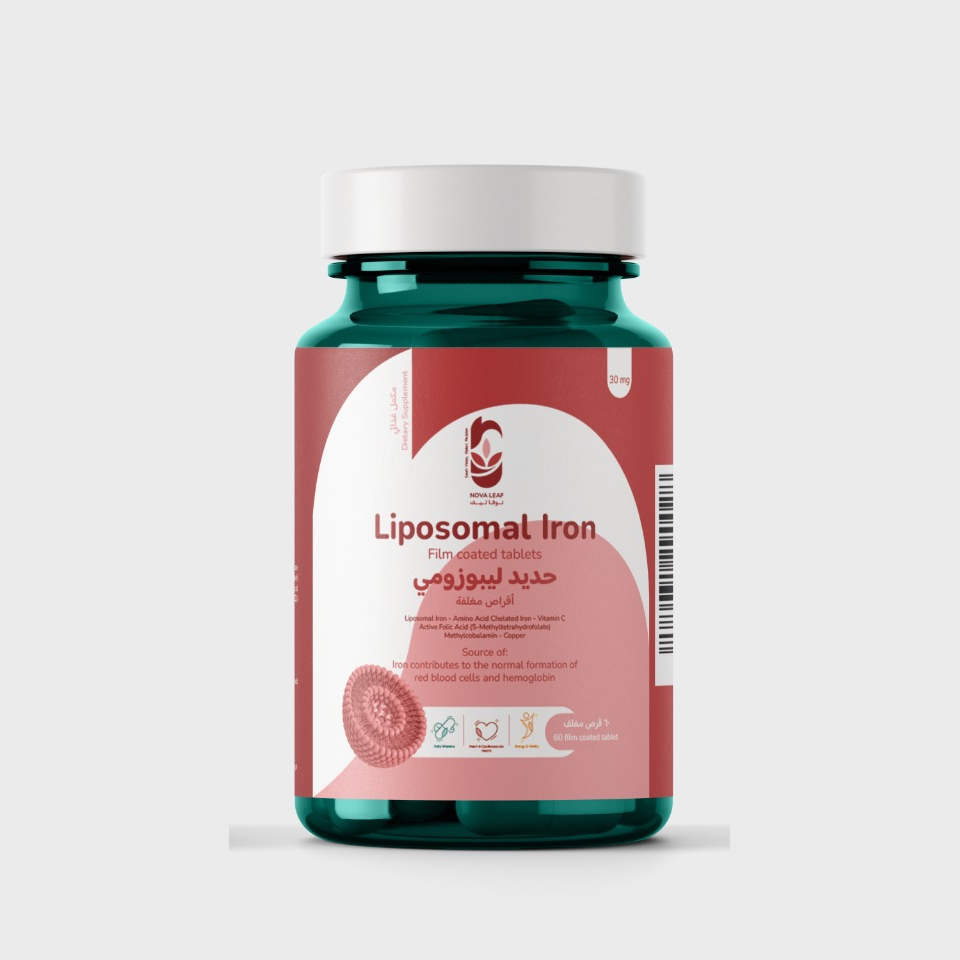
Nova Leaf Liposomal Iron 45 mg 60 Tablet
125,25 Including tax