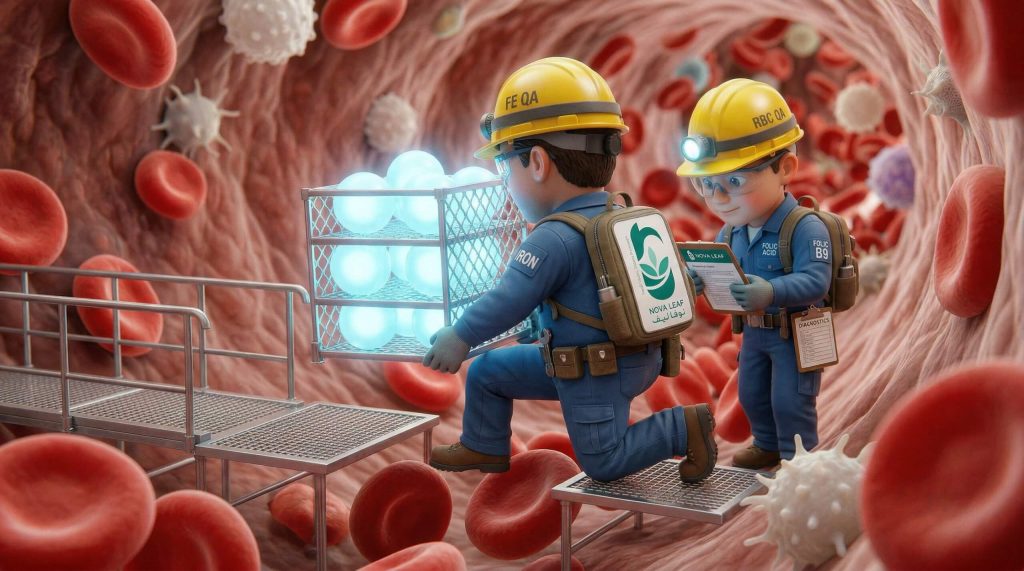
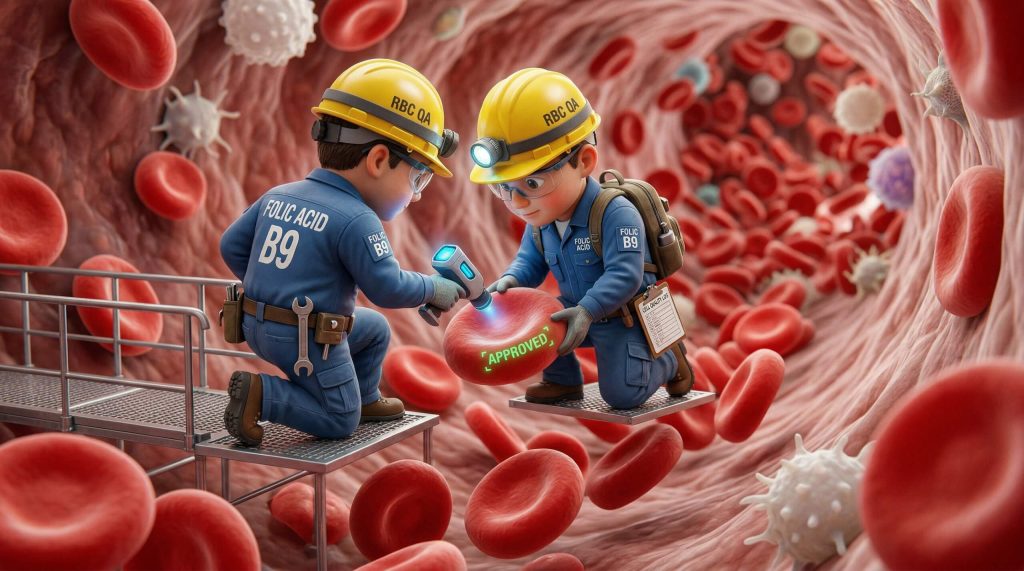
Folic acid is the synthetic form of Folate. Its primary mission is essential for synthesizing and repairing DNA and RNA. Without it, our cells simply cannot divide or multiply.
- Synthetic Form: Folic Acid.
- Active Form: 5-MTHF (5-Methyltetrahydrofolate) or Levomefolic Acid.
- Why it matters: Roughly 40–60% of the population has a genetic variation (MTHFR) that reduces their ability to convert folic acid into its active form. Using 5-MTHF ensures the body gets what it needs immediately, especially during pregnancy.
1. The Master of Blood Maturation
Folic Acid is responsible for the construction of the red blood cells.
- The Division Phase: In the bone marrow, precursor cells must divide rapidly to become mature red blood cells. Folic acid provides the genetic instructions for this division.
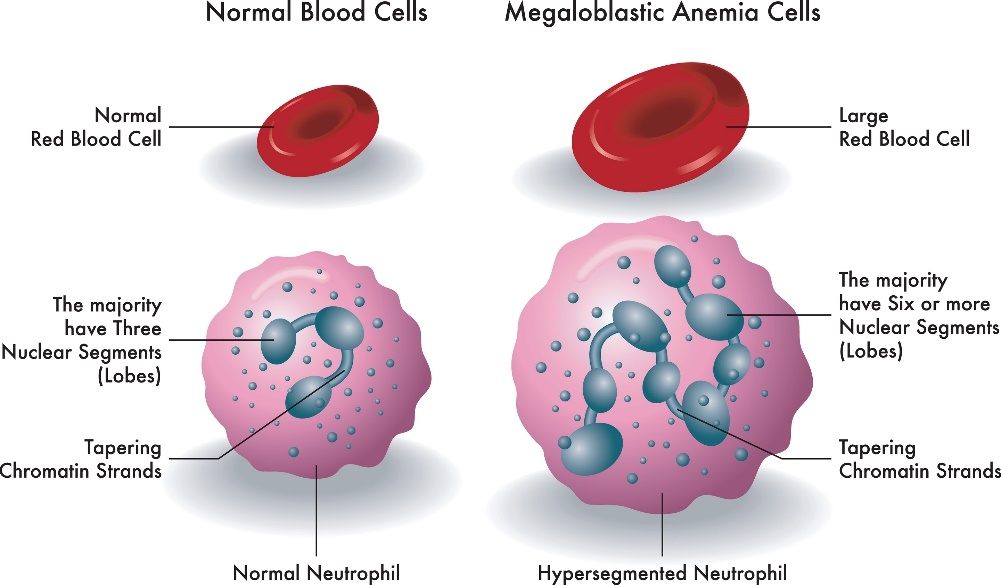
- Megaloblastic Anemia: When B9 is missing, cells grow larger and larger but cannot divide. These “giant” cells (megaloblasts) are too big to leave the bone marrow or circulate through small capillaries.
2. The Relationship with Iron
Folic acid and Iron are complementary partners in Hemopoiesis (blood production).
- The Synergy: Iron builds hemoglobin molecules, while Folate ensures there are enough healthy containers (cells) to hold that hemoglobin.
3. The Gold Standard for Pregnancy
The importance of Folic Acid in pregnancy cannot be overstated. It is critical even before a woman knows she is pregnant.
- Neural Tube Formation: Folic acid is required for the closure of the baby’s neural tube (which becomes the brain and spinal cord) within the first 28 days of conception.
- DNA Replication: It supports the rapid cell growth of the placenta and the developing fetus.
- Prevention of Defects: High-quality clinical evidence shows that adequate Folate reduces the risk of Spina Bifida and Anencephaly by up to 70%.
Deficiency Symptoms: Signs of Slow Renewal
Because Folate is tied to cell turnover, the symptoms often appear in tissues that grow the fastest (skin, blood, and the gut):
- Oral Sores: Painful ulcers or canker sores on the tongue or inside the mouth.
- Gastrointestinal Issues: Chronic diarrhea or poor absorption of nutrients.
- Premature Graying: Since hair follicles are fast-growing cells, a lack of B9 can lead to early pigment loss.
- Cardiovascular Risk: Low B9 leads to high levels of homocysteine, an amino acid that can irritate blood vessels and increase the risk of heart disease that needs B9 to help in its breakdown.
Scientific References
- Bailey, L. B., et al. (2015). Biomarkers of Folate Status in Pregnancy and Their Association with Adverse Outcomes. Nutrients.
- Greenberg, J. A., et al. (2011). Folic Acid Supplementation and Pregnancy: More Than Just Neural Tube Defect Prevention. Reviews in Obstetrics and Gynecology.
- Koury, M. J., & Ponka, P. (2004). New insights into erythropoiesis: The Roles of Folate, Vitamin B12, and Iron. Dietary Supplementation.
- Scaglione, F., & Panzavolta, G. (2014). Folate, folic acid and 5-methyltetrahydrofolate are not the same thing. Xenobiotica.