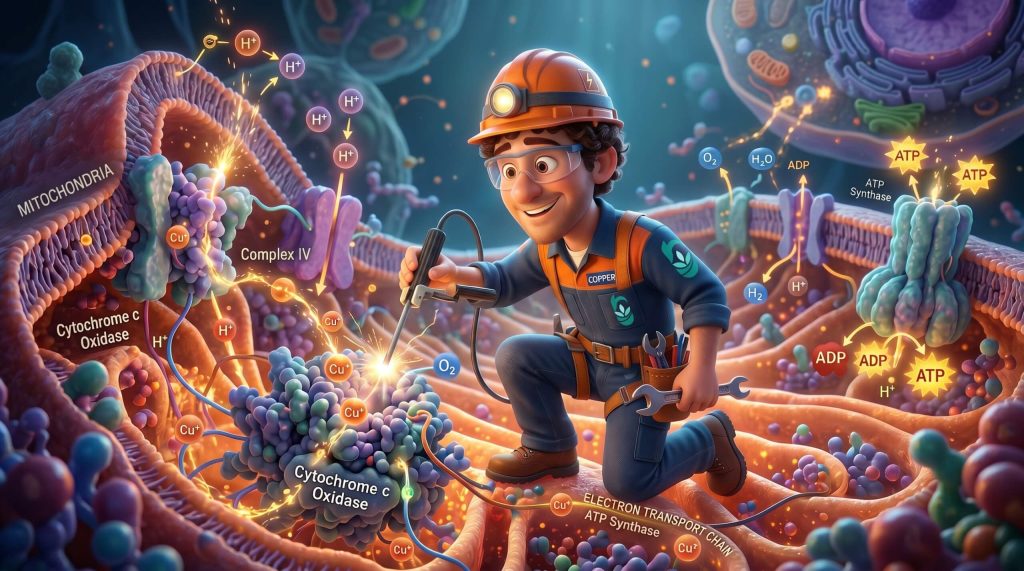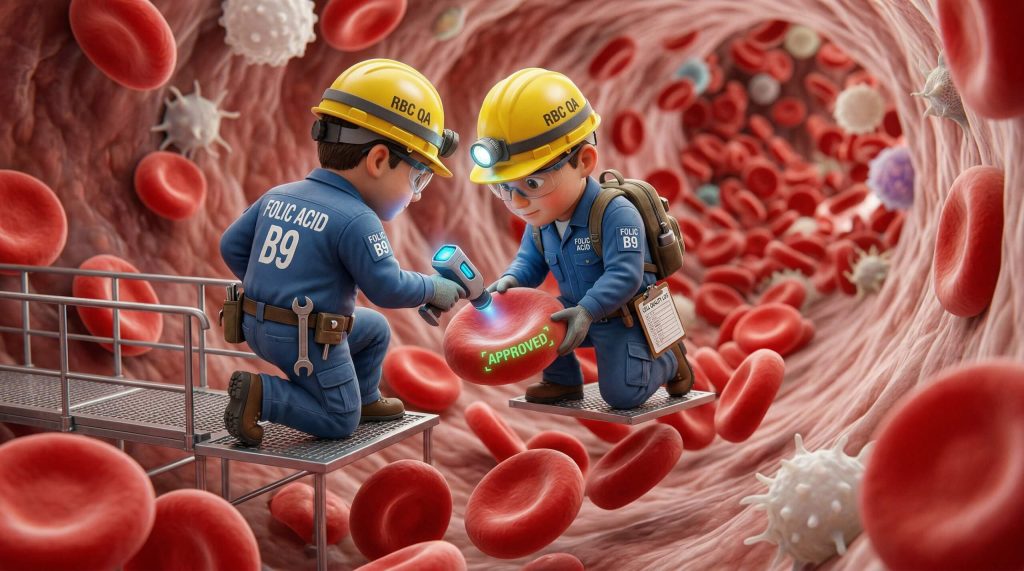
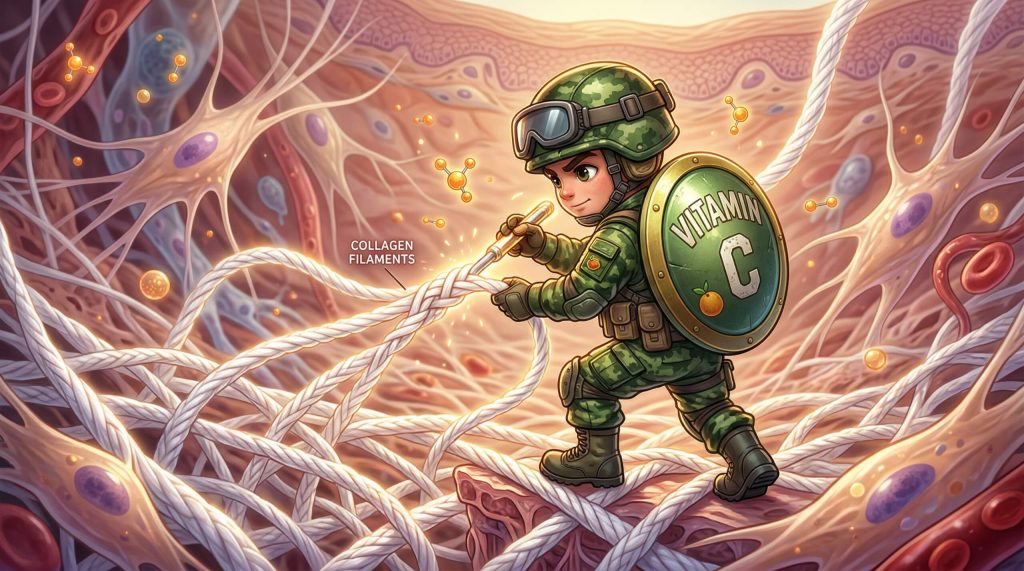
Vitamin C, scientifically known as Ascorbic Acid, is a potent antioxidant that the human body cannot synthesize or store in significant quantities. Beyond its well-known role in supporting the immune system, Vitamin C serves as a fundamental biochemical catalyst in several critical pathways. From the synthesis of collagen, to its vital role in mineral absorption, Vitamin C is an indispensable element for systemic health and cellular repair.
The Diverse Functions of Vitamin C
Vitamin C is a powerful antioxidant that protects our cells from damage. Its main roles include:
- Collagen Synthesis: Vitamin C is essential for producing collagen, the protein responsible for wound healing and keeping skin, cartilage, and blood vessels intact.
- Immune Support: It stimulates the production and function of white blood cells, helping the body respond effectively to infections.
- Antioxidant Protection: It is a scavenger for free radicals, which are unstable molecules that contribute to aging and chronic diseases.
The Iron Connection: The Ultimate Synergist
One of the most important clinical roles of Vitamin C is its effect on iron absorption. Vitamin C acts as a reducing agent, converting this iron into a form that the body can easily take up in the small intestine.
Clinical Tip: Taking just 100 mg of Vitamin C can increase iron absorption by up to 67%. This is why many premium iron supplements now include Vitamin C in their formulation.
Recognizing the Gap: Deficiency Symptoms
Because our bodies cannot store Vitamin C for long periods, a consistent daily intake is required. When levels fall too low, the following symptoms may appear:
- Gingivitis: Swollen, bleeding, or purple-colored gums.
- Poor Wound Healing: Cuts and bruises that take an unusually long time to disappear.
- Easy Bruising: Weakened capillaries that rupture easily under the skin.
- Joint Pain: Resulting from weakened collagen structures in the connective tissues.
Nature’s Sources
While citrus fruits are the most famous source, many other foods are actually more concentrated in Vitamin C:
- Top Tier: Guava, Red Bell Peppers, and Kiwi.
- The Citrus Family: Oranges, Lemons, and Grapefruit.
- Others: Broccoli, Strawberries, and Brussels sprouts.
Tip:
Vitamin C is sensitive to heat and light. To get the maximum benefit, it is best to consume these foods raw or lightly steamed rather than boiled.
The “Master Architect” of the Skin
While many people use Vitamin C serums topically, internal Vitamin C is the engine that drives skin health from the inside out.
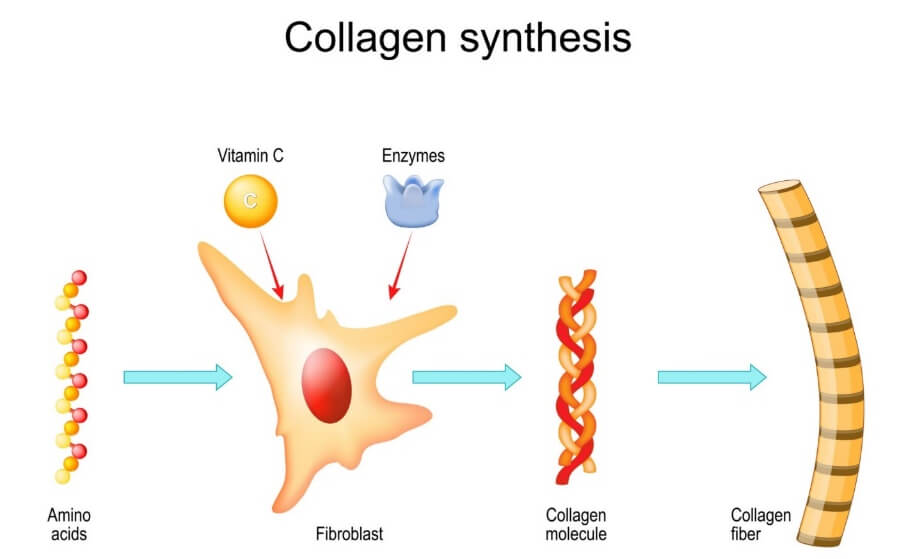
1. The Collagen Engine
Collagen is the structural protein that gives skin its elasticity and firmness. Vitamin C acts as a mandatory co-factor for the enzymes that stabilize the collagen molecule.
- Without it: Collagen fibers become weak and disorganized, leading to sagging skin and premature wrinkles.
- With it: The skin maintains its elasticity and structural integrity.
2. UV Protection and Photo-Aging
Vitamin C is not a sunscreen, but it is a biological shield. When UV rays hit the skin, they create oxidative stress (free radicals). Vitamin C neutralizes these molecules before they can damage the DNA of your skin cells, which helps prevent photo-aging (dark spots and leathery texture).
3. Wound Healing and Scarring
Vitamin C accelerates the migration of the cells that produce connective tissue (fibroblasts) to the site of an injury. This is why it is often recommended post-surgery or for those with persistent acne scars, it speeds up the re-paving of the skin surface.
The Shield and Sword of the Immune System
Vitamin C is highly concentrated in immune cells, often at levels 10 to 100 times higher than in the blood plasma. This suggests it is a primary fuel for our body’s defense.
1. Strengthening the Shield (The Epithelial Barrier)
The first line of defense is our skin and the linings of our respiratory and digestive tracts. Vitamin C supports the integrity of these barriers by promoting collagen production. A leaky barrier is an invitation for pathogens.
2. Sharpening the Sword (White Blood Cells)
Vitamin C supports the function of various immune cells:
- Neutrophils & Macrophages: These are the front-line soldiers that swallow and destroy bacteria. Vitamin C enhances their ability to travel toward an infection and their ability to engulf and kill the invader.
- Lymphocytes (T-cells & B-cells): Vitamin C promotes the proliferation of these cells, which are responsible for remembering past infections and creating antibodies.
3. Cleaning Up the Battlefield (Antioxidant Action)
When immune cells fight a virus or bacteria, they release free radicals to kill the invader. However, these can also damage the immune cells themselves. Vitamin C acts as an antioxidant, protecting the soldiers from their own weapons so they can keep fighting.
Vitamin C: Fetus development
Vitamin C during pregnancy isn’t just for the mother’s immunity; it is a structural necessity for the baby.
- Building the Baby’s Tissues: Just as it builds collagen in adults, Vitamin C is the primary architect for the baby’s developing skin, bones, and connective tissues.
- The Essential Gatekeeper: Vitamin C is crucial for the absorption of iron. Without it, the mother may struggle to meet the high iron demands of pregnancy, even with supplementation.
- Placental Health: It helps maintain the strength of the amniotic sac (the water around the baby) and supports a healthy placenta, reducing the risk of premature rupture of membranes.
Scientific References
- Carr, A. C., & Maggini, S. (2017). Vitamin C and Immune Function. Nutrients.
- Lane, D. J., & Richardson, D. R. (2014). The active role of vitamin C in mammalian iron metabolism: Much more than just enhanced iron absorption! Free Radical Biology and Medicine.
- Pullar, J. M., et al. (2017). The Roles of Vitamin C in Skin Health. Nutrients.
- Lynch, S. R., & Cook, J. D. (1980). Interaction of vitamin C and iron. Annals of the New York Academy of Sciences.
- Pullar, J. M., et al. (2017). The Roles of Vitamin C in Skin Health. Nutrients.
- Telang, P. S. (2013). Vitamin C in dermatology. Indian Dermatology Online Journal.
- Boyera, N., et al. (1998). Effect of vitamin C and its derivatives on collagen synthesis and cross-linking by normal human fibroblasts. International Journal of Cosmetic Science.
- Carr, A. C., & Maggini, S. (2017). Vitamin C and Immune Function. Nutrients.
- Wintergerst, E. S., et al. (2006). Immune-enhancing role of vitamin C and zinc and effect on clinical conditions. Annals of Nutrition and Metabolism.
- Hemilä, H. (2017). Vitamin C and Infections. Nutrients.
- Casanueva, E., & Viteri, F. E. (2003). Vitamin C and Oxidative Stress in Pregnancy. The Journal of Nutrition.
- Woods, J. R., et al. (2001). Vitamin C and E: beneficial or harmful in pregnancy? Free Radical Biology and Medicine.