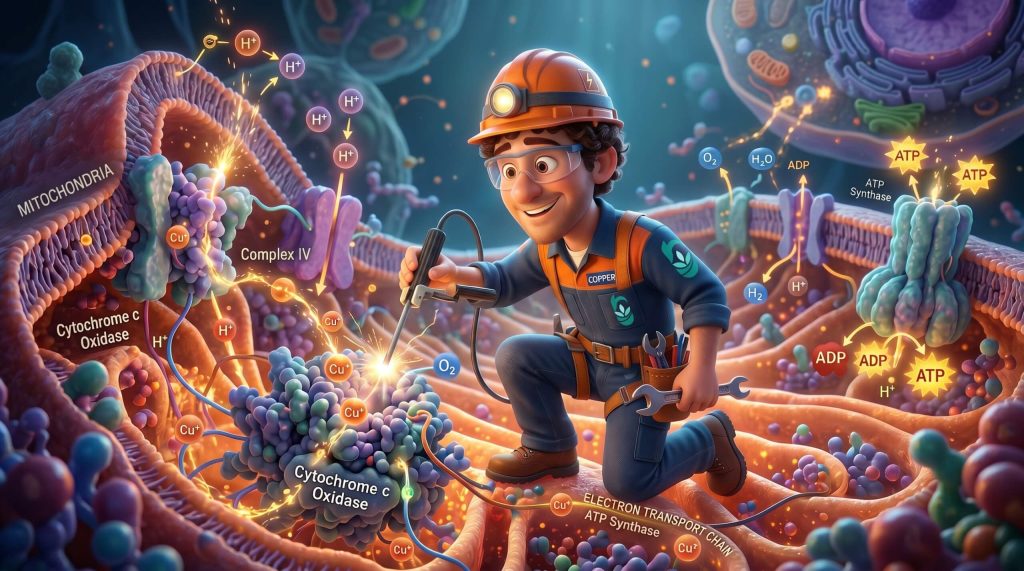

While many vitamins are absorbed easily, Vitamin B12 requires a complex process involving the stomach, pancreas, and small intestine to enter the bloodstream. It is essential for every cell in the body, acting as a key “switch” for DNA synthesis and energy metabolism.
1. The Architect of Blood Maturation
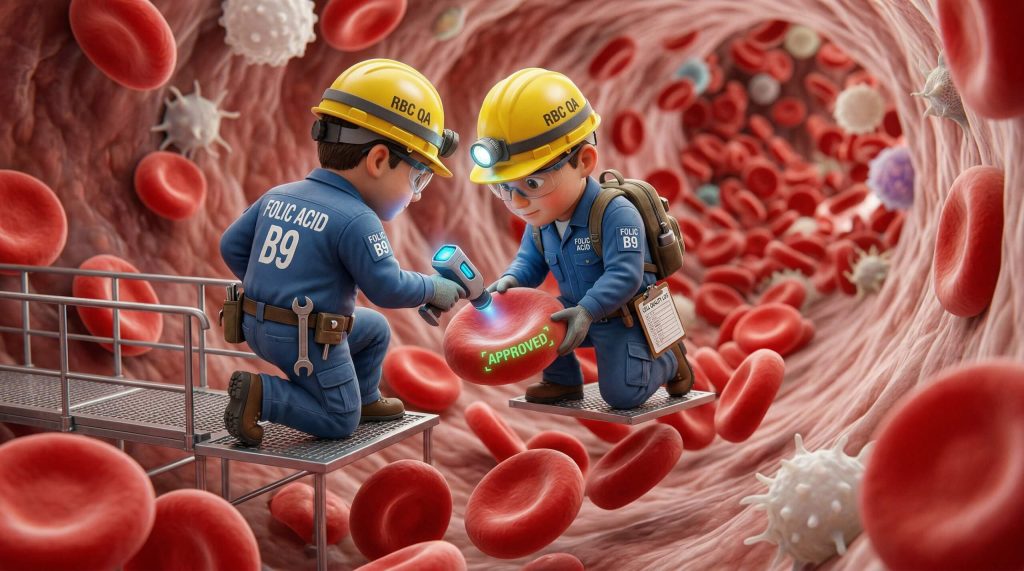
While Iron provides the functional core (Hemoglobin), Vitamin B12 is essential for the structural integrity and maturation of the red blood cell.
- The Maturation Process: B12 is essential for DNA synthesis during the production of red blood cells in the bone marrow.
- Megaloblastic Anemia: Without enough B12, red blood cells cannot divide properly. They become abnormally large, fragile, and inefficient at carrying oxygen. This is distinct from iron-deficiency anemia, where cells are too small.

2. The Iron Connection: A Vital Partnership
Iron and B12 are teammates in the fight against anemia.
- The Synergy: You need iron to color the blood and B12 to shape it.
- Clinical Masking: Interestingly, taking high doses of Folate (B9) can sometimes mask a B12 deficiency by fixing the blood cells while the nerve damage continues.
3. Protection of the Nervous System
B12 is the primary builder of the Myelin Sheath which is the protective coating around nerves, much like the plastic insulation on an electric wire.
- Without B12: The insulation wears thin, leading to short circuits in the nervous system, manifesting as tingling, numbness, or loss of balance.
Warning Signs: Recognizing B12 Deficiency
Because the body stores B12 in the liver for several years, deficiency symptoms often creep up slowly, making them easy to ignore:
- Neurological: Persistent pins and needles (paresthesia) in the hands and feet.
- Cognitive: Significant memory lapses, confusion, or brain fog.
- Physical: A smooth, red, and painful tongue due to inflammation (glossitis).
- Psychological: Unexplained changes in mood or bouts of depression.
The Nervous System: The “Electrician” of the Body
Vitamin B12 is the primary nutrient responsible for the maintenance and repair of the Myelin Sheath. Myelin serves as the biological equivalent of cable insulation; it prevents signal dissipation and significantly accelerates the velocity of signals.
Speed of Communication
Without a healthy myelin sheath, electrical impulses in your nerves slow down or leak out. This is why B12 deficiency leads to pins and needles sensation in the hands and feet.
- The Repair Cycle: B12 is a co-factor in the synthesis of methionine, which is essential for the methylation process that creates and maintains these nerve coatings.
2. Cognitive Health and Neurotransmitters
B12 is involved in the synthesis of neurotransmitters like serotonin and dopamine. These are the chemical messengers that regulate mood, focus, and memory.
Brain Atrophy: Low B12 levels over a long period are linked to brain shrinkage (atrophy) in older adults, which can mimic or accelerate symptoms of dementia and cognitive decline.
B12 in Pregnancy: Building the Future
During pregnancy, the demand for Vitamin B12 increases significantly. It works in a tight “triple partnership” with Folic Acid (B9) and Iron to ensure healthy fetal development.
- Prevention of Anemia: Since maternal blood volume increases by nearly 50% during pregnancy, B12 is vital to ensure that the mother can produce enough red blood cells to support both herself and the growing baby.
- Neural Tube Development: Along with Folate, B12 is crucial for the proper formation of the baby’s brain and spinal cord. Deficiency in the early stages can increase the risk of neural tube defects.
- Fetal Brain Maturity: B12 is essential for the myelination of the fetal central nervous system, laying the foundation for the child’s future cognitive and motor skills.
Scientific References
- O’Leary, F., & Samman, S. (2010). Vitamin B12 in Health and Disease. Nutrients.
- Stabler, S. P. (2013). Vitamin B12 Deficiency. New England Journal of Medicine.
- Miller, J. W. (2018). Vitamin B12 and the Nervous System. Encyclopedia of Endocrine Diseases.
- Green, R., et al. (2017). Vitamin B12 deficiency. Nature Reviews Disease Primers.
- Calderón-Ospina, C. A., & Nava-Mesa, M. O. (2020). B Vitamins in the nervous system: Current knowledge of the biochemical modes of action and synergies. CNS Neuroscience & Therapeutics.
- Reynolds, E. (2006). Vitamin B12, folic acid, and the nervous system. The Lancet Neurology.
- Finkelstein, J. L., et al. (2015). Vitamin B12 status in pregnant women and their infants. Nutrients.
- Molloy, A. M., et al. (2008). Effects of folate and vitamin B12 deficiencies during pregnancy on fetal, infant, and child development. Food and Nutrition Bulletin.