
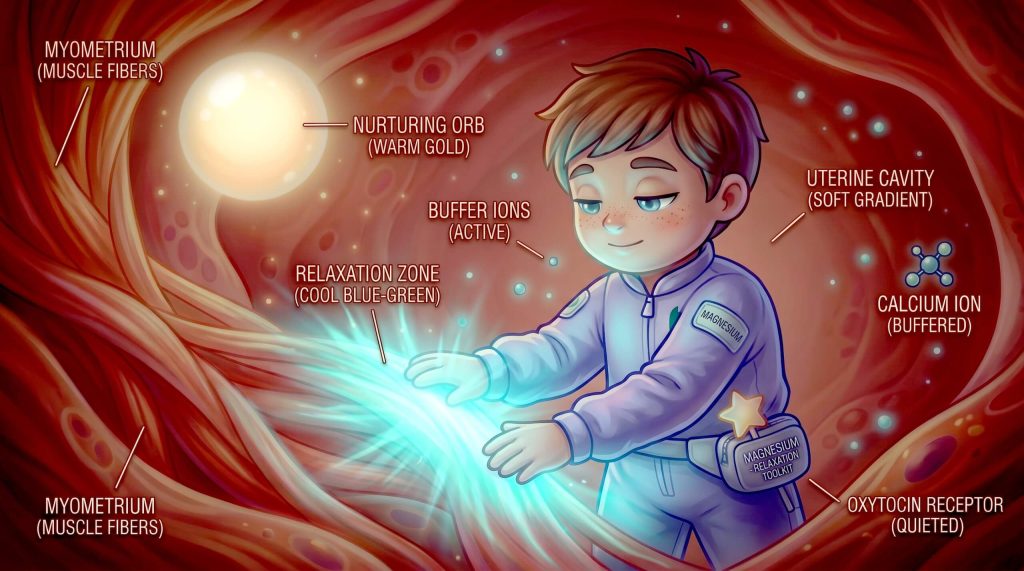
The influence of magnesium on women’s health is deeply connected to its role as a natural calcium-channel blocker and its ability to modulate neuronal signaling. Throughout the menstrual cycle, the concentrations of estrogen and progesterone hormones fluctuate, which directly impacts the intracellular levels of magnesium. These fluctuations are often the root cause of the increased frequency of migraines and menstrual pain observed in the luteal phase.
1. The Pathophysiology of Primary Dysmenorrhea
Primary dysmenorrhea is characterized by painful uterine contractions caused by the release of prostaglandins, inflammatory signaling molecules, in the uterine lining. These contractions restrict blood flow to the uterine tissue, resulting in acute pain.
Magnesium acts as a powerful smooth-muscle relaxant. It inhibits the synthesis of PGF2α (prostaglandin F2-alpha) and competes with calcium to prevent excessive uterine cramping. By promoting vasodilation and reducing the contractile force of the uterus, magnesium restores blood flow to the tissue and alleviates the primary source of pain. Furthermore, the administration of magnesium in combination with Vitamin B6 has been shown in clinical trials to be significantly more effective than placebo in reducing the intensity of both physical pain and the emotional symptoms of Premenstrual Syndrome.
2. Migraine Prophylaxis: Neuronal and Vascular Stability
The American Academy of Neurology and the American Headache Society have classified magnesium as a Level B evidence-based treatment for migraine prevention. Migraines are complex neurological events involving both vascular and neuronal components, and magnesium addresses both.
3. Hormonal Synergy and the Luteal Phase
During the week preceding menstruation (the luteal phase), magnesium levels in the blood and red blood cells often drop to their lowest point. This is also the period when the risk for menstrual migraines is highest. Supplementation during this specific window can bridge the gap created by hormonal shifts, providing a proactive shield against the neurovascular and muscular symptoms of the menstrual cycle.
Scientific resources
Teigen, L., & Boes, C. J. (2015). An evidence-based review of oral magnesium supplementation in the prophylaxis of migraine. Cephalalgia, 35(10), 912–922.
Parazzini, F., et al. (2017). Magnesium in the gynecological practice: a literature review. Magnesium Research, 30(1), 1–7.
Fathizadeh, N., et al. (2010). Evaluating the effects of magnesium and vitamin B6 on the severity of premenstrual syndrome. Iranian Journal of Nursing and Midwifery Research, 15(Suppl 1), 401–405.